

If you would like to support future generations and contribute to an intact environment, you can stipulate in your will that your assets or part of them go to the benefit of Urgewald e.V. or the Urgewald Foundation. Urgewald e.V. and the Urgewald Foundation are generally exempt from inheritance and gift tax. The easiest way to arrange this is through a bequest or a legacy: a donation without appointing the beneficiary or beneficiaries as heirs (heir = legal successor). It is a condition that obliges your heirs to fulfill your wishes and ideas.
Many people initially find it difficult to grapple with sorting their affairs and thus with their own mortality. "With some reluctance ... " is how one bequeather described her feelings writing her own will. However, I see again and again how great the relief is once people have completed this step. In my own environment, I have experienced how difficult and stressful it can be when nobody knows what the deceased would have wanted. It is particularly helpful for the bereaved if clear wishes and instructions are in place. Inheritance law in Germany is complicated. Some commonly held assumptions are wrong. A clear and legally compliant will helps create clarity.
Your last will and testament can send a powerful message – for the environment, human rights and a future worth living. With a will in favor of Urgewald or the Urgewald Foundation, you can bring about change beyond your lifetime. Because as long as fossil fuel projects continue to destroy our planet, Urgewald's work will remain indispensable.
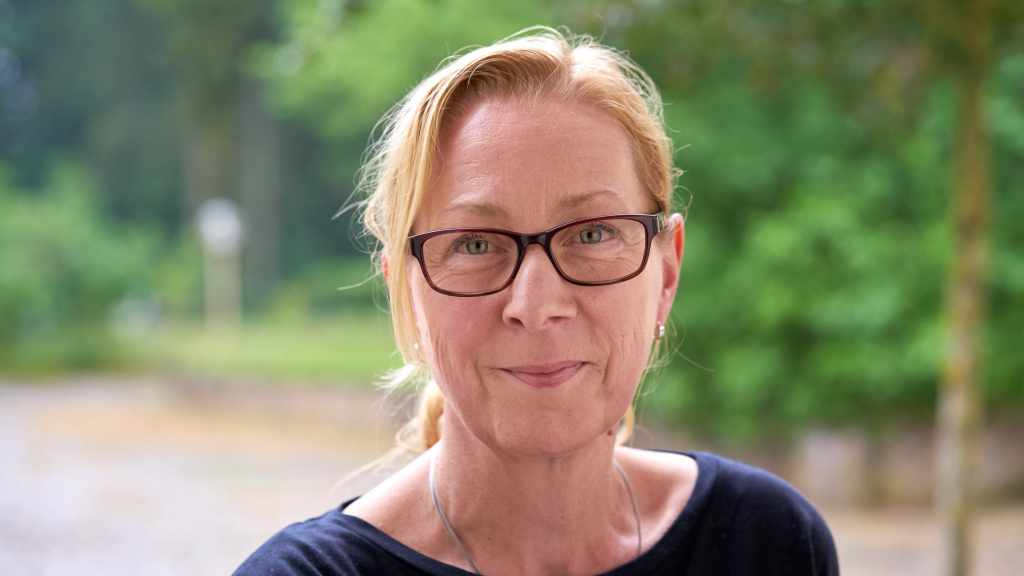
"I have felt connected to Urgewald and its mission for decades. I know this holds true for our donors, too. Many of them have also been involved for years. They are people whose support has helped Urgewald grow, who take part in our campaigns, who call with critical feedback, who write us encouraging letters and cards, who sometimes send us chocolates.
We have grown older together. I now have grandchildren whose future I worry about. Perhaps that also applies to you. Coming to terms with my own end is not easy for me either. I think it's important to manage this personal process well. That's why it makes sense for me to bring this topic to our donors’ attention.
If you need any further information or have any questions, please do not hesitate to contact me!
I would be delighted to talk with you."
- Andrea Soth

Good to know
If there is no will or inheritance contract, statutory succession automatically comes into force.
Without a will, the next of kin take precedence. This means that if you have no direct heirs (parents, children, siblings), you can of course appoint Urgewald e.V. or the Urgewald Foundation as your heirs.
Inheritance law - statutory succession
Declaration
First-order heirs are children, grandchildren and great-grandchildren (relatives in the direct line) and spouses (registered partners are equivalent to spouses). If there are no heirs of the first order, the statutory succession determines the next of kin as heirs of the second, third and fourth order. Important: If a person leaves no will and no legal heirs, the state becomes the sole inheritor.
Nowadays, straightforward family relationships are less common. Patchwork families with own children and children from previous partnerships, adoptions and registered partnerships can make inheritance cases quite complicated.
With a will, a testamentary disposition or an inheritance contract, you can organize your estate according to your personal wishes and values and (partially) override the legal order of succession. For example, you can designate persons or institutions you wish to benefit as heirs or make a bequest (donation of money or assets). Statutory succession therefore only comes into force if no other wishes have been recorded. With a will, you can preemptively and definitively record your exact wishes. A legally correct form is important for a valid will. Legal or notary consultation is highly recommended. We will be happy to put you in touch with relevant experts.
Pitfalls of statutory succession
Childless married couples, for example, often assume that the surviving spouse will be the sole heir by way of intestate (will-free) succession anyway. However, this is not the case and there is inevitably a community of heirs between the surviving spouse and the parents of the deceased or their siblings. Married couples with children also often misjudge statutory succession, assuming that a last will and testament is not required to make the surviving spouse sole heir.
Many people who refrain from drawing up a last will and testament are also unaware of the fact that intestate succession usually leads to a community of heirs with all its complications (e.g. that the estate must be administered jointly by all co-heirs for the duration of the community of heirs). Misconceptions about legal succession therefore often lead to incorrect, sometimes even disastrous, estate planning.
Community of heirs
If you do not draw up a will, you must assume that a community of heirs will usually be created in the event of inheritance. The more heirs, the more complicated the case. Individual estate planning that is as uncomplicated as possible, with the possibility of using individual options, generally requires a will to be drawn up or an inheritance contract to be concluded. It is therefore not uncommon for statutory succession to contradict the wishes of the testator. In order to steer your assets in the right direction, you therefore need to know the main features of statutory inheritance law and then use this as a basis for well thought-out estate planning.
Source: www.erbrecht.de
Examples
Heir generationIf you yourself have inherited and donate money from an inheritance to Urgewald e.V. or make an endowment to the Urgewald foundation, this amount is also tax-exempt for you. Here is an example: A gift can bypass inheritance tax: Sabine B. inherits 27,000 euros after the death of her best friend. The tax-free amount for her as a "non-relative" is 20,000 euros, so 7,000 euros from this inheritance would be taxable and she would have to pay 2,100 euros to the tax office. (The amount that exceeds the tax-free amount falls into Tax Bracket III, which is taxable at 30%.) Sabine B. decides to donate 7,000 euros to the Urgewald Foundation – there is no inheritance tax. You can reclaim any inheritance tax already paid to the tax office within 24 months of the date of inheritance if you donate the sum that exceeds your tax-free allowance. Example of a legacy"I hereby make the following bequest: |
Our examples are for general guidance only and do not represent "real" cases. We would be happy to discuss your individual situation in confidence.